
Antioch
Antioch is a parish-based ministry of youth to youth. It is for young people of high school age (equivalent to Years 10, 11 and 12) and a little older.
It is a spiritual program that begins with a weekend experience and has a strong follow-up. It offers youth an ongoing opportunity to listen, discuss and better understand what it means to be a Catholic today.
Antioch takes its name from the place of one of the first known Christian communities. “It was at Antioch that the disciples were first called Christians” (Acts 11:26).
Background
The Antioch program was developed at the University of Notre Dame, Indiana, USA in the 1960s, for use on university campuses. Since 1973, it has been adapted for those of high school age and based in parishes.
In this form, it was brought to Australia by three teenagers, Byron, Teresa and Claire Pirola, and launched in Maroubra Bay parish, Sydney in September, 1981. Since then, it has spread to all states, and further afield to New Zealand, Fiji, the Philippines, New Guinea, Indonesia and Hungary.
What are its aims?
To help our youth develop a love of Jesus and of His Church through an experience of community – a community where they are always welcome and where they can find a relevant and supportive environment.
Parish based
Considerable effort is given to involve youth from within the parish. There are a number of reasons for this.
- The parish should form part of a triad in the faith development of Catholics (together with the family and the school). Antioch provides an important ‘bridge’ between school and parish.
- Although our youth coming into the weekend often have little sense of parish, the Antioch experience can change that. They identify with their own parish and subsequently become involved.
- Families are encouraged to worship together and parish involvement lessens difficulties with transport and distance.
Spiritual
The focus of Antioch is spiritual development. It emphasises the Sacraments and takes a relational approach to faith, based on Jesus’ final prayer for unity (John 17). Its vision of Church is one of a community of believers that exists “so that the world may believe”, hence the titles of the first two National Conventions “One for Others” and “Together We Make the Difference”.
Social events are recognised as important in human development. However, the view is taken that these are best organised informally by the youth themselves and that they will flow naturally out from the creation of a Christian community.
Youth to Youth Ministry
Antioch functions through the leadership and involvement of youth. They lead the weekend, give the talks, lead the discussion and sleep groups, and most importantly, minister to each other on a one-to-one basis during the weekend and after it. By listening, sharing, supporting and challenging each other, they help each other to see their own personal situation more clearly in the light of the Gospel message.
Antioch is a powerful means of developing future leadership since it fosters an attitude that the Church believes in relationship with the Lord and with each other, and that each has a role to play in this. Youth discover that they are the Church of the present, not just the future, sometimes being even more effective in influencing the lives of their friends than priests, religious or parents. Also, youth from “parent” parish communities often participate in the formation of new communities. This further fosters a missionary spirit and Church leadership.
Antioch relies heavily on the use of human qualities of friendship and leadership. Since youth have a far better grasp of what influences their peer group than older people, it is essential that they have the major say in questions of style and in the selection of personnel for particular roles.
It is worth emphasising that the vitality and exuberance of youth are important gifts that our Church needs to fulfil its mission. These gifts need to be drawn into the mainstream of parish life, to become part of its “good news”, and not tolerated as just nice extras.
Antioch functions effectively without full-time youth workers. There is no question that the latter provide an invaluable service to our youth. However, Antioch works on peer pressure. This is more effective when it comes from their own immediate peer group than from slightly older paid staff.
Role of Adults in Antioch
Adult support is essential to the movement. Although in the background and low key, adults provide maturity, guidance and follow-through. It is important that the adult leaders be “down to earth” and trusted by the young people.
The Priest
Should ideally be a presence and a spiritual adviser in the community, especially on a one-to-one basis. However, this is not always possible, and Antioch can function in a parish with a parish priest’s approval and the initiative and support of the laity.
Religious
In some parishes the religious have been the initiators of the movement. They have an important supportive role and bring the witness of their religious vocation to the community.
The Married Couple
The married couple has a special role in Antioch and it is recommended that the programme be introduced into a parish only when a suitable married couple has made themselves available. Their role goes beyond providing the usual adult qualities needed to support any youth movement. It is more than providing male and female adult role models.
The focus of Antioch is building a Christ-centred community. The married couple is the basic human community and, through their Sacrament of matrimony and their witness of commitment and intimacy, they bring to the community a dimension that is distinct from that brought by a single person.
This is especially relevant for the many young people coming through Antioch from broken families and hurt situations.
Hospitality of the home and openness of the couple are key factors. Their home and their hearts become, in a true sense, the “drop-in centre” for the community.
For these reasons, it is important to have couples who are sensitive to the reality of the young people’s world. They must be willing to “roll with the punches”. Both for their own sake and for the sake of the young people they must be prepared to share themselves.
Because of the time commitments involved, it is desirable, but not essential, that the couple have teenage children involved in Antioch. In this way, they will be working with their children, not apart from them. Also, there should ideally be two or more support couples involved in each community.
It should be mentioned that couples associated with the Marriage Encounter, Cursillo and Celebrate Love movements, have played a major supportive role in the establishment and spread of Antioch.
Format
The weekend begins on Friday 7.30pm and ends on Sunday 9.30 pm. It consists of talks, discussions, shared prayer, music and recreation. There is a strong emphasis on scripture and the sacraments of Reconciliation and the Eucharist.
The team: 20-25 young people present the weekend. They give all the talks and lead the discussions. A priest and 2 or 3 other adults (ideally a married couple) are also part of the team.
An established community would spend two months or more in preparation for a weekend. A community in formation would take three to six months. In all the detailed preparation for the weekend, the overall consideration in judging the preparedness of the team is the love of the community.
Participants
These number 30-60, including the team. Age range is 16-20 (equivalent to Years 10-12 and a little older). Antioch draws on a wide range of young people from “swots” to “surfies” and from “ragers” to “goody goodies”.
Venue
The weekend is held in a parish centre, or local school. All meals are prepared and served by volunteer parishioners and younger brothers and sisters (the God Squad). On Friday and Saturday nights, the participants are welcomed into the homes of parishioners in “sleep groups”, i.e. separate groups of five boys, or five girls. Participants bring sleeping bags and sleep on the floor.
Prayer support
The weekend has a very strong prayer support from parishioners and other Antioch communities. Each participant has a special “prayer family” for the weekend
The Weekly prayer meeting is the official follow-up to the Antioch weekend. It is usually held on a Sunday night between 7.30 and 9.30 pm. and consists of a talk, share groups, shared prayer, music and fellowship. As on the weekend, it is run by the youth themselves, with adult support.
Midweek Mass
Attending a parish mid-week Mass together has become an established part of the community life. This is not anofficial part of the program, but has arisen spontaneously in Australia. Apostolic activities are practical ways of building community also, and members are active in many areas such as parish liturgy, visiting the aged and sick, pro-life, etc. Social activities are not formally part of the program, but they arise spontaneously and increase the sense of belonging to the Church community.
The purpose of the follow-up is to help our youth live as effective members of the Body of Christ, and to grow in their personal relationship with the Lord and with one-another. All members should feel free to come and go and yet always be welcomed back.
Cost
A donation (currently $50.00) is suggested from each person attending the weekend. This covers food, drinks, bibles (each participant receives a pocket-sized Good News), candles, postage, printing, etc.
Method of Spread
Antioch spreads from parish to parish. An interested parish sends a team of ten young people, together with a married couple and a priest and/or religious, to experience a weekend. This is followed by a formation period of 3 – 6 months, during which the original group invites others to join them, one at a time, until a community of about 20 young people is formed. When ready, they then put on their own parish weekend, which in turn is attended by a team from another interested parish.
Prayer is the key ingredient needed to underpin all this preparation.
It is recommended that two weekends per year are held in each parish.
When a weekend is being held for the first time in a parish, two or three experienced leaders from another community should be included in the presenting team. This provides background support and helps
maintain the focus and spirit of the movement.
Selection of Initial team
This is crucial. It will decide the effectiveness of the future community. Antioch works on peer pressure. Therefore, it is essential to select the natural peer group leaders – not only the “Holy Joes”, but those who will pull in others naturally by their personalities.
As these young people are usually not very visible around the Church, it is important for the parish priest, or the adults concerned, to seek out these leaders through the advice of young people. Often the best leaders are those with a good faith back¬ground, but who are to be found at the pubs, clubs and in the centre of class restlessness at school. A neighbouring established Antioch community may be of great help here, as its members often attend the same regional school as potential leaders. Without attention to this aspect of Team selection, Antioch can still emerge as a valuable spiritual influence in the parish. However, its potential will be severely limited.
Organisation
Antioch operates with a minimum of structure and the emphasis is on parish autonomy. Because of this autonomy, it is important that parishes be responsible for adhering to the guidelines of the Antioch experience and that they maintain links with the rest of the movement. To assist with this, there are co-ordinating teams at a diocesan and national level. Each usually comprises two youth, a married couple and priest or religious. Their role is to:-
- Maintain the focus and spirit of the movement
- Facilitate communication
- Provide accountability.
The Antioch National coordinators report to the Australian Catholic Bishops Conference.
Content of Weekend Talks:
All talks given on the weekend follow an established outline. The talks are written by youth, workshopped by adult supports and are read on the weekend. All talks rely heavily on personal sharing and emphasise the relevance of the Gospels to life experiences. The following is a brief summary of the content of the talks. Most talks are followed by a share group, while a few have a written reflection.
Introduction: Given by weekend leaders (boy and girl). A warm welcome and explanation of the format and style of the weekend.
God’s Call: Each one of us has a personal call from God. It’s up to us to respond.
Meditation on Prayer: Explains that prayer is an awareness of our union with God, which takes many’ forms. Creates a relaxed but motivational approach to prayer.
Meditation on Life as Giving: Jesus loves each of us personally and gave His life for us. Our lives can be an extension of that life of giving.
Self Image or God’s Image: We project an image to make us more acceptable to others, but God loves us even when we don’t live up to our image. We are made in His image.
Work of Christ: Christ is our bridge to the Father. We can participate in His work. Scripture is an important way of finding out more about this. Distribute New Testaments.
Being a Christian: A Christian is one who puts Jesus in the centre of his/her life. It is much more than just being a good person.
Christian Community: We are all called personally to belong to a community that is Christ-centred.
Meditation on the Eucharist: In the Eucharist, we celebrate the Bread of Life (Communion) and the people bound together in His Body.
Church and the World: We are the Church – a Christ-centred community of people in love.
Mission: We carry out Christ’s mission in our daily lives, as individuals and as a community.
Following Christ: A re-evaluation of lifestyle, attitudes, behaviour. Written reflection.
Working for Christ: To make this weekend the start of a growth experience, we need to make a personal commitment to Christ in some specific practical way and join regularly in the follow-up weekly prayer meeting.
Music:
Music is one of God’s great gifts, and an important component in the Antioch Weekend Experience. We cannot overestimate the power of music as ministry – the way in which it can set the mood, control emotions and behaviour, be a medium of prayer – touch the hearts of everyone during the course of the Weekend.
One only has to consider the influence and popularity of present day rock groups to recognize that music is a language of its own, and one that youth understand and relate to.
Too often in our parishes music is not an attractive or relatable force for youth – they are expected to fit in with an older, more adult reflective style of expression.
So Antioch provides a medium in which our young people can express their vitality and exuberance in authentic worships – and have a lot of fun!
Adults play an important background role – most especially through affirmation, but also in encouraging awareness of music as ministry.
The Symbol of Antioch
This is a rock and a rose. Participants are challenged to decide if they will be like a rock which seems safe but is hard, cold and never changing, or a rose, which may seem riskier but which lives and can grow into a thing of beauty and gives joy to many.
Weekend Follow-up
The Weekly prayer meeting
This is the official follow-up to the Antioch weekend. It is usually held on a Sunday night between7.30 and 9.30 pm. and consists of a talk, share groups, shared prayer, music and fellowship. As on the weekend, it is run by the youth themselves, with adult support.
Midweek Mass:
Attending a parish mid-week Mass together has become an established part of the com¬munity life. This is not an official part of the program, but has arisen spontaneously in Australia.
Apostolic activities
These are practical ways of building community also, and members are active in many areas such as parish liturgy, visiting the aged and sick, pro-life, etc.
Social activities are not formally part of the program, but they arise spontaneously and increase the sense of belonging to the Church community.
The purpose of the follow-up
The purpose is to help our youth live as effective members of the Body of Christ, and to grow in their personal relationship with the Lord and with one-another. The understanding is that this will be done through a small Christian community as an integral part of the parish. All members should feel free to come and go and yet always be welcomed back.
IT’S A JUNGLE OUT THERE!!! …drugs, alcohol, sex, career, relationships.
The pressures are huge! Every day you’re faced with life changing decisions and God’s plan for your life is not always obvious. There are so many competing voices for your attention – who do you listen to?
We’re all hungry for love and acceptance. We all want to live a life of significance.
The choices you make now will affect the rest of your life. The question is: are your choices taking you closer to the person you want to be?
The Antioch Weekend is a packed program of talks, music, games, discussion and fun. It’s led by youth who have prepared all the talks, supported by adult leaders. You’ll meet heaps of new people and get to know them in a real way. You’ll also discover more about yourself and get some answers to those big questions that we all think about – who am I, really? where am I going? what’s the purpose of my life?
An Antioch weekend is different to anything you’ve ever experienced in your life. It’s a one shot deal, so make sure you can make the WHOLE weekend…believe us, you’ll be glad you did!
- Friday 7pm – Sunday 9:30pm
- Fun guaranteed…sleep is NOT!
- Talks … eating… games… eating… music… did we mention eating?
Antioch Weekly Meeting
We meet every Sunday night in local communities. There’s usually a talk, Share Groups and lots of music!! Visitors are always welcome! So why don’t you drop by sometime? Contact your local Antioch group for the time and location.
Antioch celebrates 30 years in Australia
On 25th September, the Antioch Youth Movement celebrated its thirty years in Australia with a Mass of Thanksgiving and a Combined Communities Meeting. These were held at the parish where Antioch began in Australia, at St Mary and St Joseph’s, Maroubra Bay, Sydney.
From this parish it spread to neighbouring parishes and across Australia and even overseas – to New Zealand, Fiji, the Philippines, PNG and Hungary.
Many past Antiochers attended. The Principal Celebrant, Bishop Peter Comensoli, was on the first Antioch team in Wollongong many years ago. “Antioch didn’t make me a priest”, he commented, “but it made me the sort of priest I am”.
The original three youth who brought Antioch to Australia, Byron, Teresa and Claire Pirola spoke at the Meeting. Early Antioch musicians returned to combine with the current Antioch music ministry at the Mass.
Mark Rohanna and Vanessa Fallon were Antioch’s first music ministers. They led the 400-strong youth choir for the first Australian visit of Blessed John Paul II when he stunned his entourage by joining the singers and holding their hands aloft as they swayed to the music.
Some of the present youth were amazed to realize that their parish Sunday night prayer meetings have been running continuously for nearly three decades.
It was a time to remember special events such as the pioneering role of Antioch in sending Australia’s first pilgrimage group to World Youth Day, in Czestochowa, Poland, in 1991. Also recalled was the carrying of the WYD Cross over Sydney Harbour Bridge and through the streets of Sydney as early as 1992.
More recently, at WYD Madrid, Antioch was one of three Australian groups that served as ‘animators’ for one of the English-speaking catechesis sites. Members of the group spoke at the 30th Anniversary Meeting, developing further the WYD Madrid theme from Colossians 2:7.
Antioch’s first National Chaplain, Fr John Shallvey MSC, returned from his current parish of Bourke to attend along with ten other concelebrating priests.
In his homily, Bishop Comensoli commented that all things start small. However, when they have Christ at their centre, they can multiply and show the light of Christ to others. “The gift of Antioch that we celebrate today is the gift of that little light of Christ that is within each of us”, he said. “May it shine, shine, shine”.
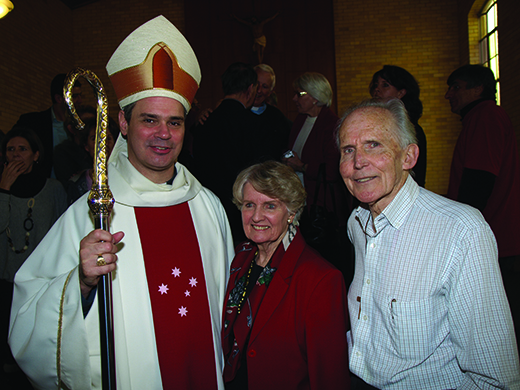
Some of the original Antioch Members from 1981 with Bishop Peter Commensoli
Some of the original Antioch Members from 1981 with Bishop Peter Commensoli
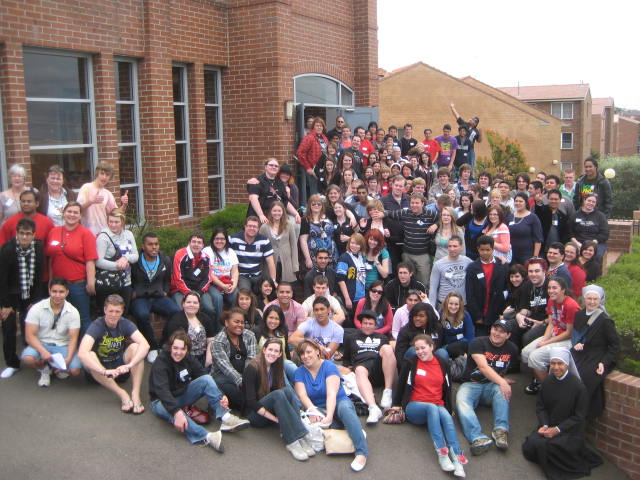
The Church at St Mary & St Joseph's Maroubra Bay was packed with past and present Antioch members. It was the parish that hosted the first Antioch weekend in Australia in 1981.
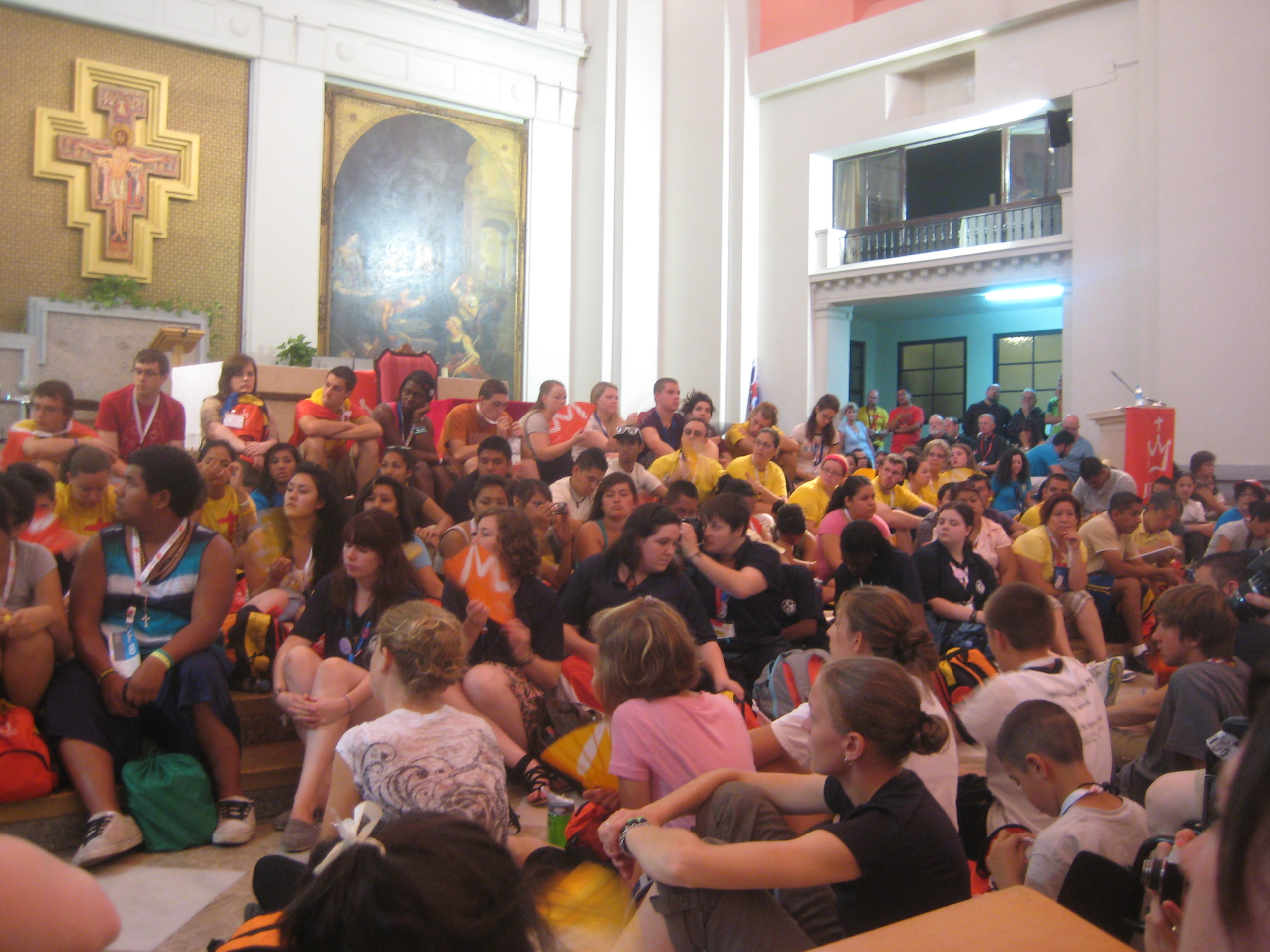
In its 30 Years in Australia, tens of thousands of Australian youth have attended an Antioch weekend.
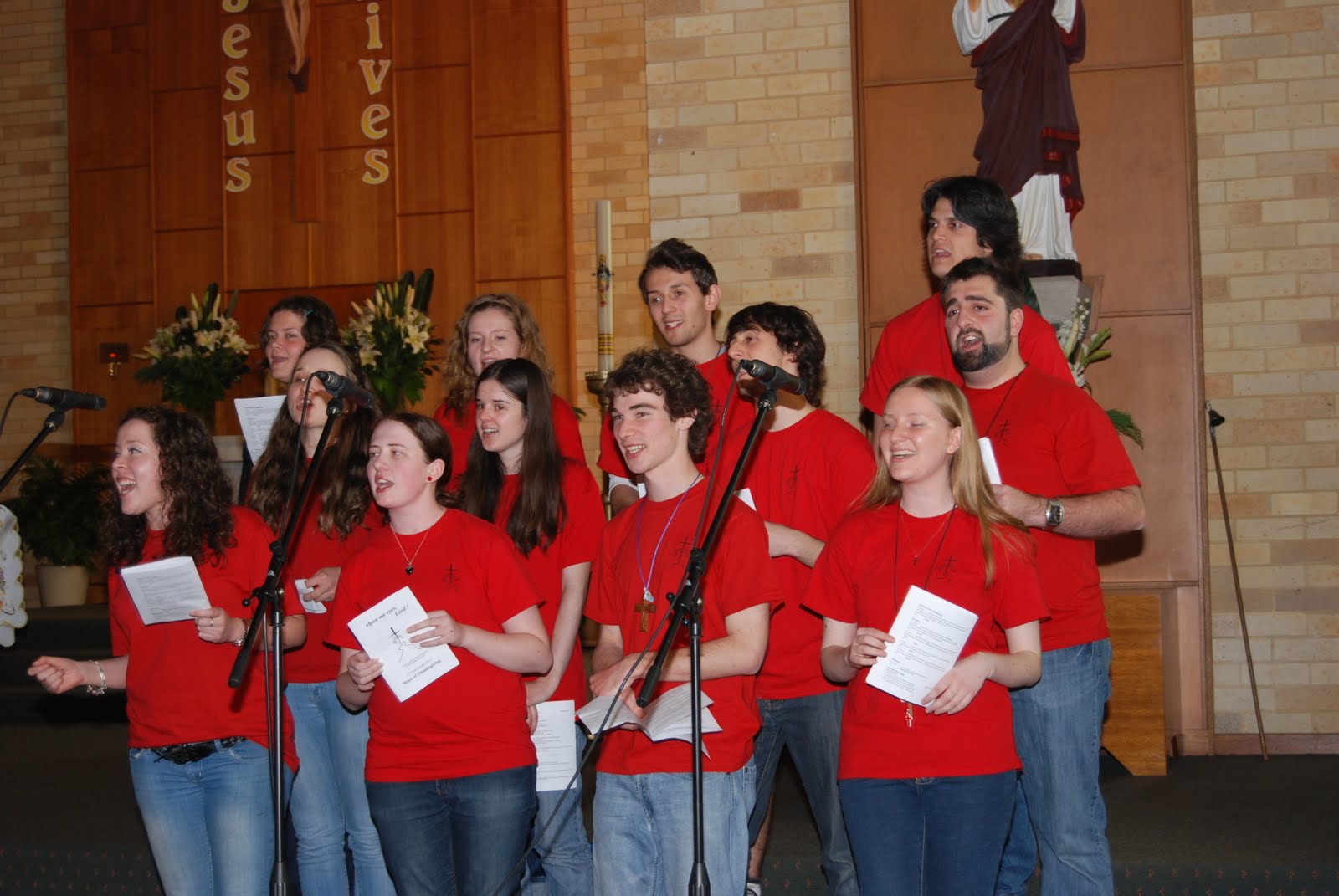
Choir-Antioch-31st-Anniversary
Antioch celebrates 30 years in Australia