Meeting Summary
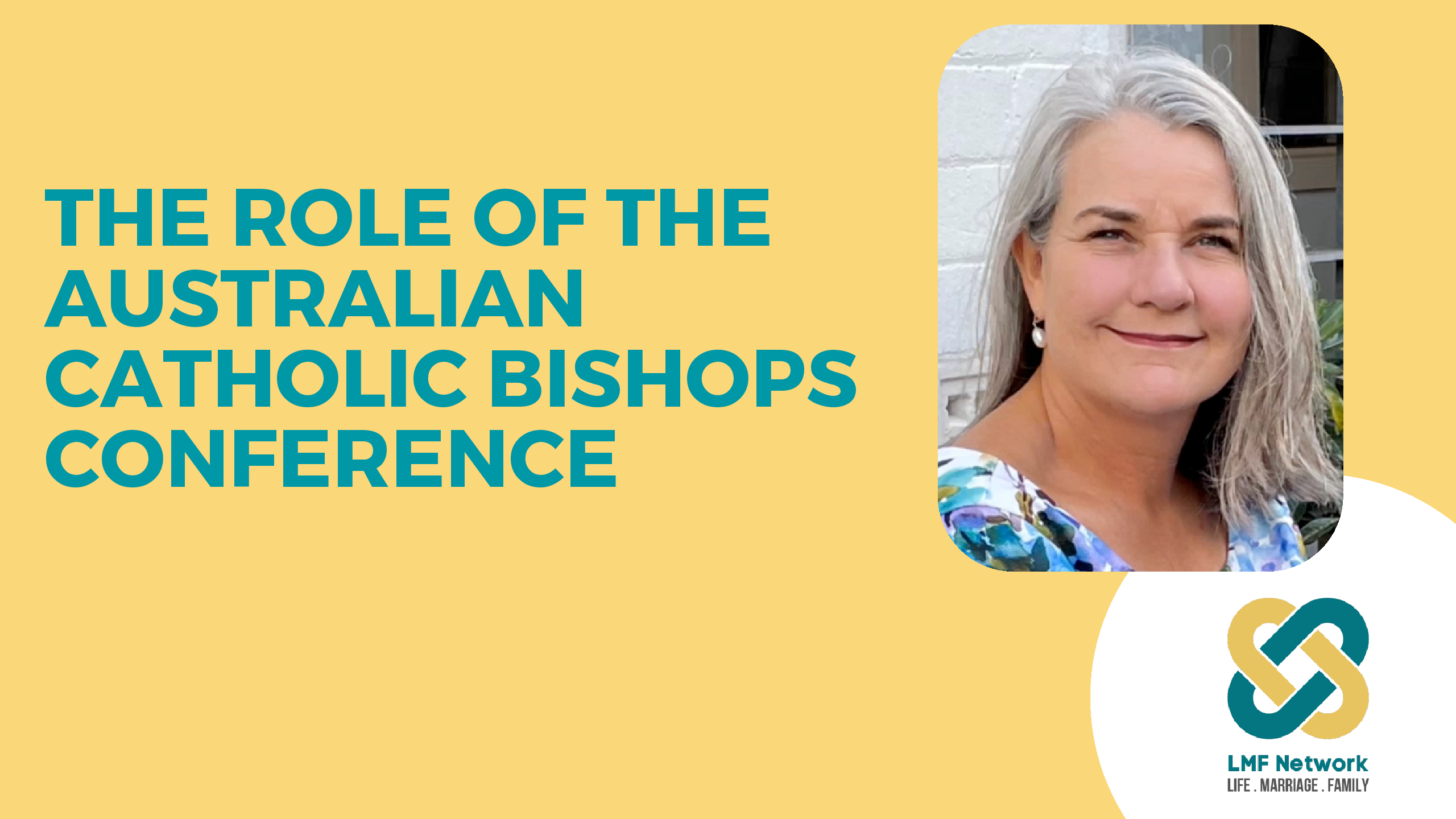
This LMF Network meeting provided an inside look at how the Australian Catholic Bishops Conference (ACBC) is structured and how it supports the life, marriage, and family space across Australia. Lara Kirk, newly appointed as Executive Secretary for the Bishops’ Commission for Life, Family and Public Engagement, walked the network through how the ACBC operates — from the twice-yearly plenary meetings of all Australian bishops, to the permanent committee that keeps things moving between plenaries, to the expert lay advisory bodies that inform episcopal decision-making.
Lara highlighted key recent outputs of her commission including the Created and Loved resource for Catholic schools on gender identity (now being updated in light of rapid legal and policy changes), the To Witness and to Accompany with Christian Hope suite of euthanasia resources, and an Amoris Laetitia summary guide. She also outlined current projects in motion: an updated prenatal diagnosis resource, a revived marriage catechumenate project, and ongoing advocacy to restore government funding for natural fertility services (Billings and Symptothermal), which was cut without explanation two years ago after 50 years of support.
The second half of the meeting became a live consultation, with Lara inviting the network to identify where the ACBC should be directing its efforts. Members raised the shortage of NaPro Technology doctors, the impact of social media on family life, gender-based violence, supporting couples to discern before engagement, marriage validation pathways, and the housing affordability crisis as a real barrier to young Catholic families getting established.
About the Presenter
Lara Kirk has over 30 years of experience in ministry, with a particular focus on young people and the Church’s vision for marriage and sexuality. She spent more than 11 years as Marriage, Family and Relationships Coordinator for the Archdiocese of Canberra and Goulburn before joining the ACBC Secretariat in March 2025 as Executive Secretary for the Bishops’ Commission for Life, Family and Public Engagement. She and her husband Tim run a family vineyard where they raised five children.
Key Takeaways
- The ACBC only formally “exists” as a conference when all bishops are gathered in plenary session (twice a year, in May and November) — outside of that, a permanent committee carries on the work. Understanding this distinction helps when thinking about how and when to engage the conference.
- Lay people can contribute to the ACBC’s work through the expert advisory councils that feed into each Bishops’ Commission. Some councils formally advertise for applications; others invite based on specific expertise. The chair of each council (e.g. Anna Cron for the Life Marriage and Family Council) is the main point of contact.
- The To Witness and to Accompany with Christian Hope resources on euthanasia are freely downloadable and ready to use in parishes, schools, and healthcare settings — but awareness is low. Network members are encouraged to share these widely.
- Created and Loved (the 2022 gender guidance resource for Catholic schools) is being updated to reflect significant recent changes in law and policy across Australia, the UK, and New Zealand.
- The ACBC is actively seeking input from practitioners in the field. Lara directly invited the network to channel ideas, gaps, and priorities through her or the commission’s email address ([email protected]).