General Overview
Conversation Summary:
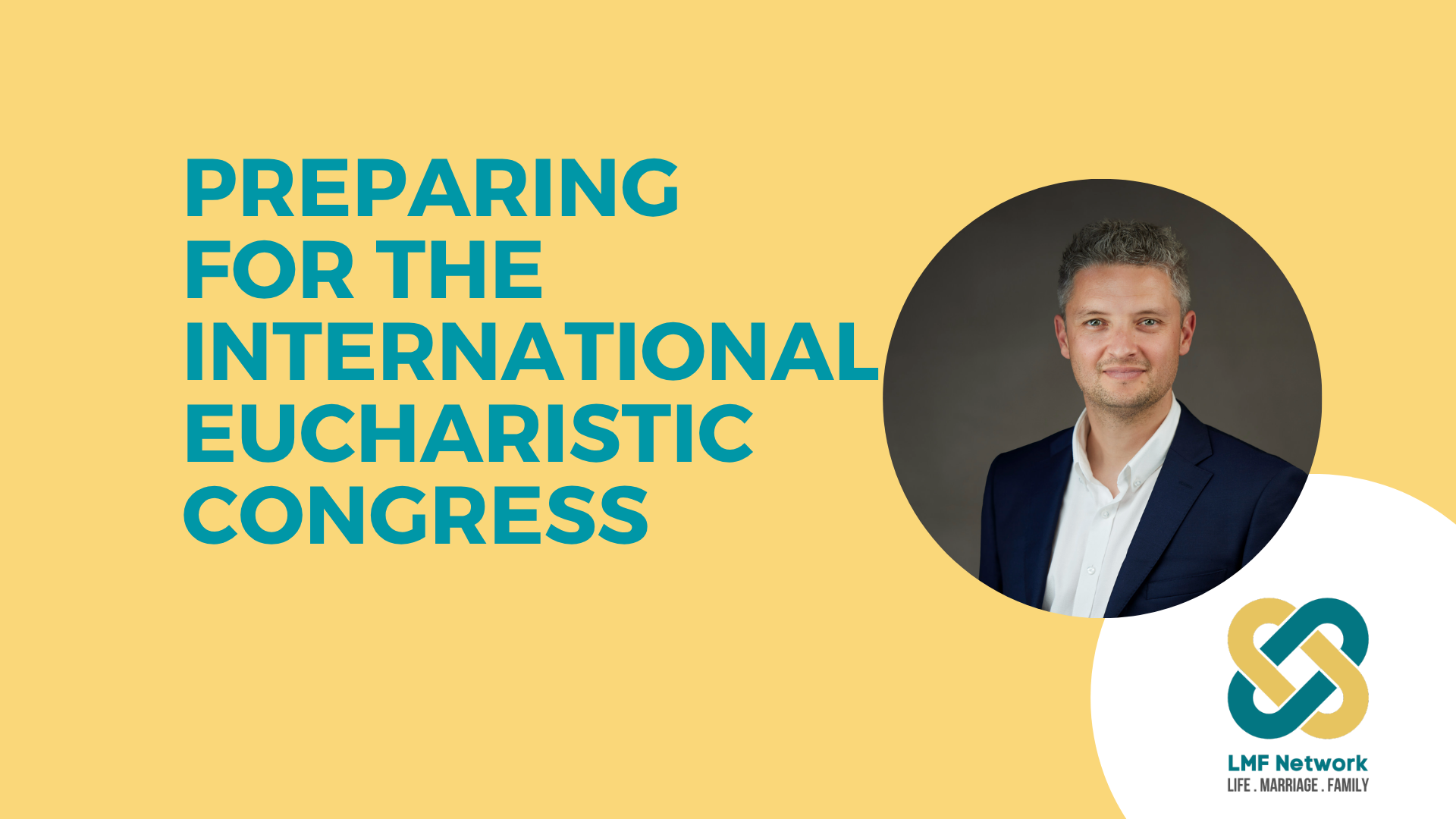
The meeting of the Life Marriage Family Network began with introductions, a prayer, and announcements. The central part of the meeting was a presentation by Benjamin Galea, the Chief Operating Officer for the 54th International Eucharistic Congress (IEC), scheduled for Sydney in 2028. He detailed the vision, branding, and strategic plan for the event, which was being referred to as “Eucharist 28.” He outlined a three-phase approach: a three-year period of Eucharistic renewal leading up to the Congress, the week-long Congress itself, and a subsequent phase of mission extending beyond 2028. Following his presentation, Mr. Galea engaged in a question-and-answer session with the network members, discussing practical aspects such as family participation, opportunities for Catholic movements, interfaith dialogue, and event logistics.
Interviewee Background:
Benjamin Galea is the Chief Operating Officer of the 54th International Eucharistic Congress. He has a Master of Business Management and had senior executive experience across faith-based and not-for-profit organizations. His previous experience included involvement in the delivery of World Youth Day 2008 and leading the Young Men of God movement for ten years. He is a husband and father of four with a passion for supporting Catholic formation and mission.
Key Points
- The 54th International Eucharistic Congress (IEC) is scheduled to be held in Sydney in 2028 and was being branded as “Eucharist 28.”
- The core vision for the event was “to see our Lord Jesus Christ in his eucharistic mystery ever better known, loved and served.”
- The plan is structured in three phases: a three-year period of Eucharistic renewal, the Congress week in 2028, and a post-Congress phase of continued mission.
- The official theme, approved by the Holy Father, was “This is my body given for you.”
- A primary goal was to encourage hundreds of thousands of people to return to Sunday Mass.
- The lead-up communications campaign was titled “Believe,” aimed at renewing the faith of practicing Catholics, inviting back those who had drifted away, and welcoming those curious about the faith.
- The Congress was intended to be an event for the entire church, with specific planning underway for children, youth (integrating the Australian Catholic Youth Festival), and families.
- Partnerships with various Catholic ministries and movements were seen as crucial to the success of the Eucharistic renewal.
Promotional Video:
Notable Quotes
- (8:25): “to see our Lord Jesus Christ in his eucharistic mystery ever better known, loved and served.” Ben Galea stated this as the central vision statement for the Congress and its preceding renewal period.
- (13:23): “this is more than an event and that’s really important for us that while we’re journeying towards 2028, this is actually an opportunity and a moment for a movement to take place.” He said this while explaining the core philosophy behind the branding, emphasizing the long-term goal of spiritual renewal over a single event.
- (16:37): “We want to see hundreds of thousands of people returning to Sunday mass. It’s a high ambition but it’s central to what we’re doing that this moment leads people back into our churches.” This was stated when outlining the tangible goals and desired outcomes of the Eucharistic renewal.
- (25:47): “…how are we going to bring Eucharist 28 into the life of the family, into our space with married couples who are the custodians of Eucharistic life in the home ultimately.” He made this comment at the end of his presentation, directly challenging the Life, Marriage and Family network to consider their role in the renewal.
Kicker Quotes
- (13:59): “nothing unites the church more than the Eucharist. So we’re really seeing that as a moment to capitalize on that.”
- (29:00): “…married couples who are the custodians of Eucharistic life in the home ultimately.”
- (28:05): “…for the Catholic church to really step up in this moment as a unified church to really represent to the whole country… just how powerful, how life-changing and how central the Eucharist to our lives as Catholics.”
Detailed Insights
- Ben Galea argued that the IEC 2028 should not be viewed as a standalone event, but as the culmination of a multi-year movement for Eucharistic renewal across the entire Australian church (9:32, 13:23).
- He presented the position that the renewal’s purpose was to deepen faith (“known”), encourage worship (“loved”), and inspire service (“served”), with the practical objective of boosting Mass attendance (8:25, 16:37).
- He contended that the Congress must be inclusive of all demographics within the church, from young children and families to youth and grandparents, requiring specific and tailored programming (38:35).
- He maintained that collaboration and partnership with existing Catholic ministries were essential for effectively bringing the message of renewal into parishes and homes (29:25).
- Supporting Evidence:
- To support the long-term vision, he presented a three-phase strategic plan that included the renewal period, the Congress itself, and a post-2028 mission phase (9:32).
- He provided evidence of a clear communication strategy by sharing the new branding (“Eucharist 28”) and the “Believe” campaign theme (19:25, 20:09).
- To demonstrate that the nationwide initiative had already begun, he mentioned the recent distribution of communication packs to every Catholic parish in Australia (23:03).
- As proof of the commitment to youth engagement, he cited the decision to integrate the Australian Catholic Youth Festival into the Congress week (39:49).
Themes and Trends
- Unity: The Eucharist as the ultimate sacrament of unity for the Church was a recurring theme, presented as the foundation for the entire endeavor (13:59, 27:47).
- Movement over the Event: Ben Galea repeatedly emphasized that Eucharist 28 was a long-term movement for renewal and not just a week-long conference, highlighting the importance of the three-year journey leading up to it (13:23, 26:10).
- Inclusivity: The idea that the Congress was for the whole church—including families, children, youth, and grandparents—was a consistent point, particularly during the Q&A session (38:35, 40:03).
- Partnership: The desire and necessity to partner with existing ministries to create resources and extend the reach of the renewal was a constant thread throughout the discussion (29:25, 30:20).
- Emerging Trends:
- Modernized Communication: The deliberate shift from the formal title to the more accessible brand “Eucharist 28” (19:25) and the launch of the simple, powerful “Believe” campaign (20:09) revealed a modern, strategic marketing approach for a major church event.
- Focus on Lasting Impact: The detailed three-phase plan, extending well beyond the 2028 event, indicated a trend toward creating sustained spiritual renewal rather than focusing on a singular, temporary event (9:32).
- Event Integration: The decision to merge the Australian Catholic Youth Festival into the Congress (39:49) suggested an emerging trend towards consolidating major church gatherings to maximize resources, impact, and participation.
Context and Background
- Contextual Information: The presentation occurred during a meeting of the Life Marriage Family Network, an assembly of leaders from various Catholic ministries. This context shaped the Q&A, which naturally focused on how the Congress would engage with and provide for families, married couples, and related ministries. The International Eucharistic Congress itself is a significant global gathering of the Catholic Church, convened periodically to promote awareness and devotion to the Eucharist.
- Related Events:
- World Youth Day 2008 (Sydney): This event was frequently referenced as a benchmark for scale, logistics (e.g., host families), and the spiritual impact of the journey leading up to the main event (26:18, 47:40).
- Previous International Eucharistic Congresses: The history of the IEC was mentioned, with specific reference to Sydney hosting in 1928 and Melbourne in 1973 (18:42). One attendee also shared her personal experience from the recent Congress in Ecuador (46:31).
- Australian Catholic Youth Festival (ACYF): It was announced that the ACYF that would have occurred around 2028 would be formally integrated into the Congress week (39:49).
- Potential Impact: Ben Galea’s statements positioned the Congress as a major catalyst for widespread spiritual renewal in Australia. The immediate potential impact on the audience of ministry leaders was to inspire and equip them to begin integrating the themes of Eucharist 28 into their own programming. This could foster a more unified, collaborative, and focused effort in Catholic family and life ministries across the country in the years leading up to 2028.
Follow-Up Questions:
- You outlined the “Believe” campaign’s three target audiences: the faithful, the lapsed, and the curious. What specific strategies or resources are being developed to effectively reach and engage each of these distinct groups?
- Regarding the post-2028 “Phase 3,” what initial ideas are being considered to carry the momentum forward, particularly in connection with the 2000th anniversary of Christ’s ministry in 2030?
- How does the organizing committee plan to measure the success of its ambitious goal to “see hundreds of thousands of people returning to Sunday mass”?
- Following the discussion on interfaith dialogue, what specific plans are being made to engage with Orthodox and other Christian denominations, particularly in a multicultural context like Sydney?
- Once the base catechetical text is approved by the Vatican, what is the strategy for adapting and disseminating this content for different age groups and contexts, from parish study groups to primary school classrooms?
- What is the plan for engaging dioceses and parishes that are geographically distant from Sydney to ensure they feel like active participants in the three-year renewal and not just observers of a faraway event?