General Overview

Interview Summary
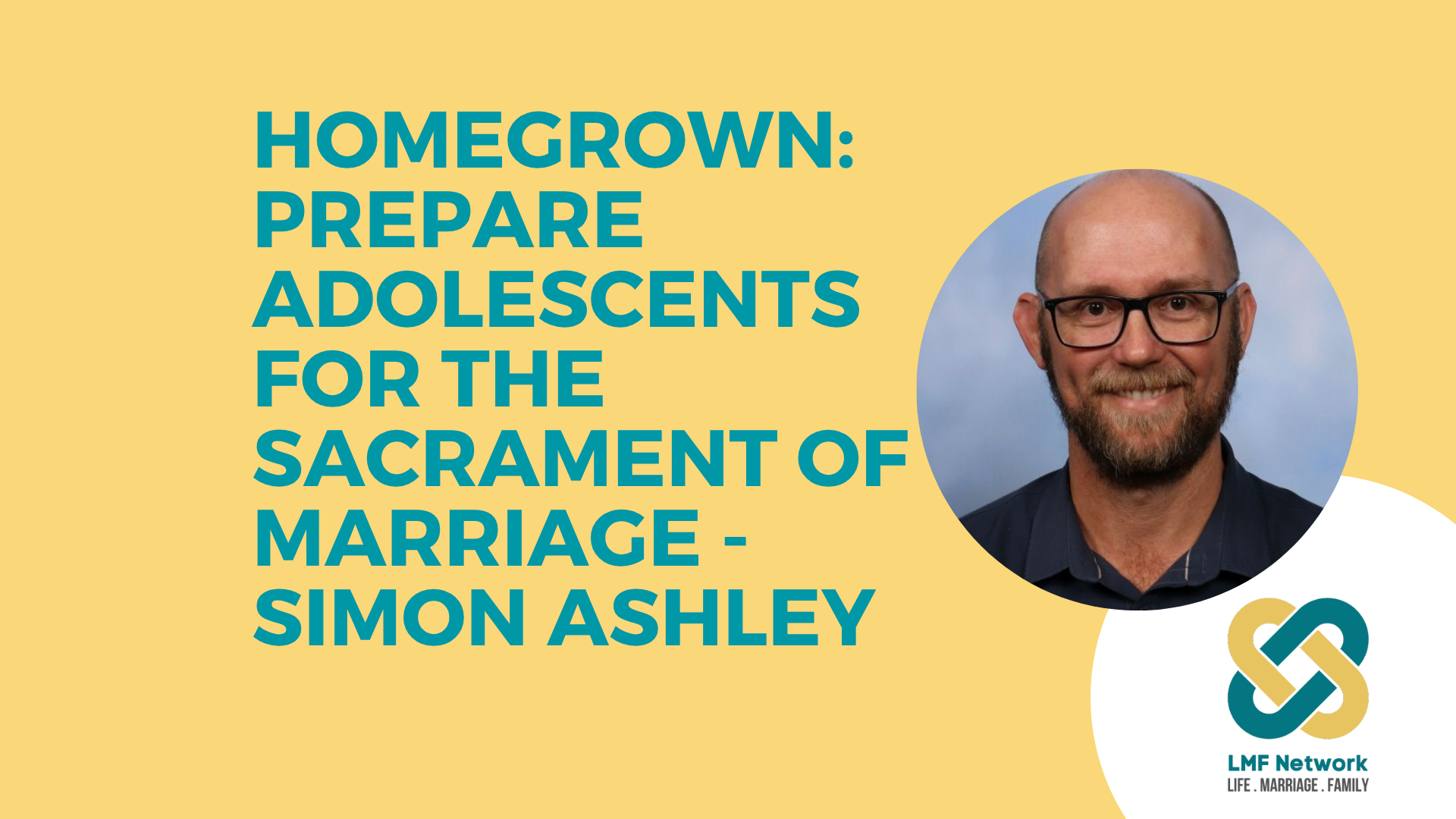
The meeting of the Second Life Marriage Family Network featured a presentation by Simon Ashley on his program, “Homegrown.” After introductions and network updates, Simon Ashley detailed the purpose and structure of Homegrown, a resource designed to support parents in their role of forming their adolescent children for marriage. He explained that the program was based on John Paul II’s Theology of the Body and the marriage catecumenate model, aiming to fill a gap in sacramental formation for teenagers. He described the program’s two-level structure, its use of technology to engage young people, and its parent-led, community-supported model. The presentation was followed by a question-and-answer session where attendees inquired about the program’s practical implementation, community dynamics, and target audience.

Interviewee Background
Simon Ashley was introduced as a Catholic educator and the founder of the Homegrown initiative. He held a Master of Theology from the John Paul II Institute for Marriage and Family, where his research focused on adolescence and the pre-marriage catecuminate. His professional experience included working as a teacher and sacramental coordinator in parish life. His work was described as being driven by a commitment to strengthening families and equipping parents to accompany their adolescent children.

Key Points

  • A significant gap existed in sacramental formation for adolescents, who were often overlooked between the sacraments of initiation and the sacraments of communion like marriage.
  • Current models of formation for youth, such as guest speakers or standard school curriculum, were often inadequate as they lacked ongoing discipleship, accompaniment, and the principle of subsidiarity (empowering those at the grassroots level).
  • The Homegrown program was founded on the principles of John Paul II’s three-stage catecumenal model (Kerygma, Liturgy, Mystagogy) and his Theology of the Body.
  • The program was designed to empower parents as the primary educators of their children, particularly in the areas of relationships, puberty, and vocation.
  • Homegrown was structured in two levels: Level One focused on introductory, “kerygmatic” conversations, while Level Two delved deeper into the “mystagogical” catechesis of Theology of the Body.
  • The program utilized modern technology, including a website and AI-generated content (e.g., glossaries written in the voices of various authors), to make complex theological concepts more accessible and engaging for teenagers.
  • The delivery model centered on a community of families. Parents met online to discuss the materials and support one another, and then implemented the conversations and activities with their children in a way that best suited their family dynamics.

Notable Quotes

  • “The adolescents, they get overlooked… in terms of a rigorous sacramental program, it doesn’t target them. And if sacraments are meant to be efficacious signs of God’s grace, then why aren’t we doing that?” (15:30) – Said while explaining the core problem his program sought to address.
  • “It’s a parent’s job to do that because a parent is a primary educator. It’s completely inappropriate for a teacher to be put into a position where they have to do that.” (17:20) – Stated when contrasting the role of parents with the role of teachers in sex education according to the Australian curriculum.
  • “We’ve got to stop trying to dominate spaces and we have to give a priority to time. So what he meant by that is we can’t just rock up and say, look, this is the way it is… We have to drip feed what we want to the kids and we have to do it consistently.” (32:04) – Quoting Pope Francis to emphasize the need for a patient, consistent, and long-term approach to formation rather than a single, overwhelming “talk.”
  • “Homegrown is not me talking to your kids. Homegrown is about starting a process and getting the ball rolling and getting momentum and getting a community of people together, community of families together.” (33:20) – Clarifying that the program’s goal was to empower parents and build community, not for him to be the direct educator of the children.

Kicker Quotes

  • “Parents should be stepping into the driver’s seat on this one for sure.”
  • “It nurtures a domestic church. So it creates a space at home where we are creating this sacred space at home and having these sacred conversations with our kids.”

Detailed Insights

Main Arguments

  1. Adolescents were a neglected group in sacramental formation for marriage: Simon Ashley argued that while children were prepared for sacraments of initiation and adults for marriage, adolescents were largely overlooked, creating a critical gap in their faith journey (15:23).
  2. Parents must be the primary educators: He contended that the responsibility for this formation rested primarily with parents, not schools or outside speakers, a concept he referred to as the principle of subsidiarity (16:45). He found that trying to implement the program through the school system was not effective and that the parish and family were the proper channels (49:28).
  3. A proper framework already existed: He presented John Paul II’s catecumenal model from Familiaris Consortio and the Theology of the Body as the ideal and authoritative framework for this formation (18:18).
  4. Formation required a long-term process: He stressed that effective formation was not a one-time event but an ongoing process of conversation and accompaniment, quoting Pope Francis’s idea of giving “a priority to time” (32:04).

Supporting Evidence

  1. Personal Testimony: He shared his personal story of having an annulment in his mid-twenties, which led him to discover John Paul II’s Theology of the Body and inspired his passion for this work (10:00).
  2. Magisterial Documents: He cited specific church documents, such as Pope John Paul II’s Familiaris Consortio and Pope Benedict’s Sacramentum Caritatis, to ground his program in official Catholic teaching (18:20).
  3. Anecdotal Story: He told a story about a father who failed to connect with his first son by having a single, forced “talk” in the car but succeeded with his second son by establishing regular, open-ended time for conversation, illustrating the program’s methodology (30:45).
  4. Pilot Program Success: He referenced the positive experience and endorsements from the families who participated in the pilot program in the previous year (42:25).

Themes and Trends

Recurring Themes

  1. Subsidiarity and Parental Role: The theme of parents as the primary educators was central, mentioned repeatedly as a core principle of the program and the reason for its family-based structure (16:45, 36:24).
  2. Theology of the Body: John Paul II’s Theology of the Body was consistently referenced as the foundational theological content for the program’s catechesis (10:27, 35:30).
  3. Marriage Catecumenate: The concept of a “catecumenate” for marriage—a phased, long-term preparation—was the overarching model, applied specifically to the adolescent years (PT00H10H52S, 18:18).
  4. Accompaniment: The importance of ongoing accompaniment and discipleship, rather than one-off programs or talks, was a recurring idea (16:15, 31:45).

Interview Dynamics

Interview Flow
The session began with network introductions, followed by Simon Ashley’s structured presentation. He first identified the problem (a gap in youth formation), critiqued existing solutions, and then presented his program, “Homegrown,” as the solution. He logically walked through its theological foundations, structure, and practical application. His tone was passionate and well-informed. The flow transitioned smoothly into a Q&A session, where the tone remained collaborative and informative as he addressed practical questions from the audience.

Question Analysis
The questions asked by the audience were effective and practical. They focused on understanding the implementation of the program, such as how the “community of families” worked (45:16) and whether the primary outreach was through parishes or schools (49:19). The questions allowed Simon to elaborate on the program’s flexible, parent-led nature and the strategic choice to focus on parishes. His responses were direct, thorough, and often supported by experiences from the pilot program, which made his answers more credible and concrete.

Follow-Up Questions:

  • How do you plan to scale the training of new facilitators or mentors to lead parent groups as the program expands?
  • Have you considered developing resources or guidance for non-traditional family structures, such as single-parent households or families where parents have differing levels of faith practice?
  • What challenges do you anticipate in parishes where the leadership or community might be less familiar with or hesitant about the teachings in Theology of the Body?
  • Could you elaborate on the specific difficulties encountered when trying to implement this program in the Catholic school system?
  • How does the program curriculum guide parents in addressing contemporary sensitive topics like gender identity or same-sex attraction with their children?
  • What are your thoughts on developing the “liturgy” component of the catecumenal model, which you mentioned was challenging to implement in a Western cultural context?

Watch the Presentaion