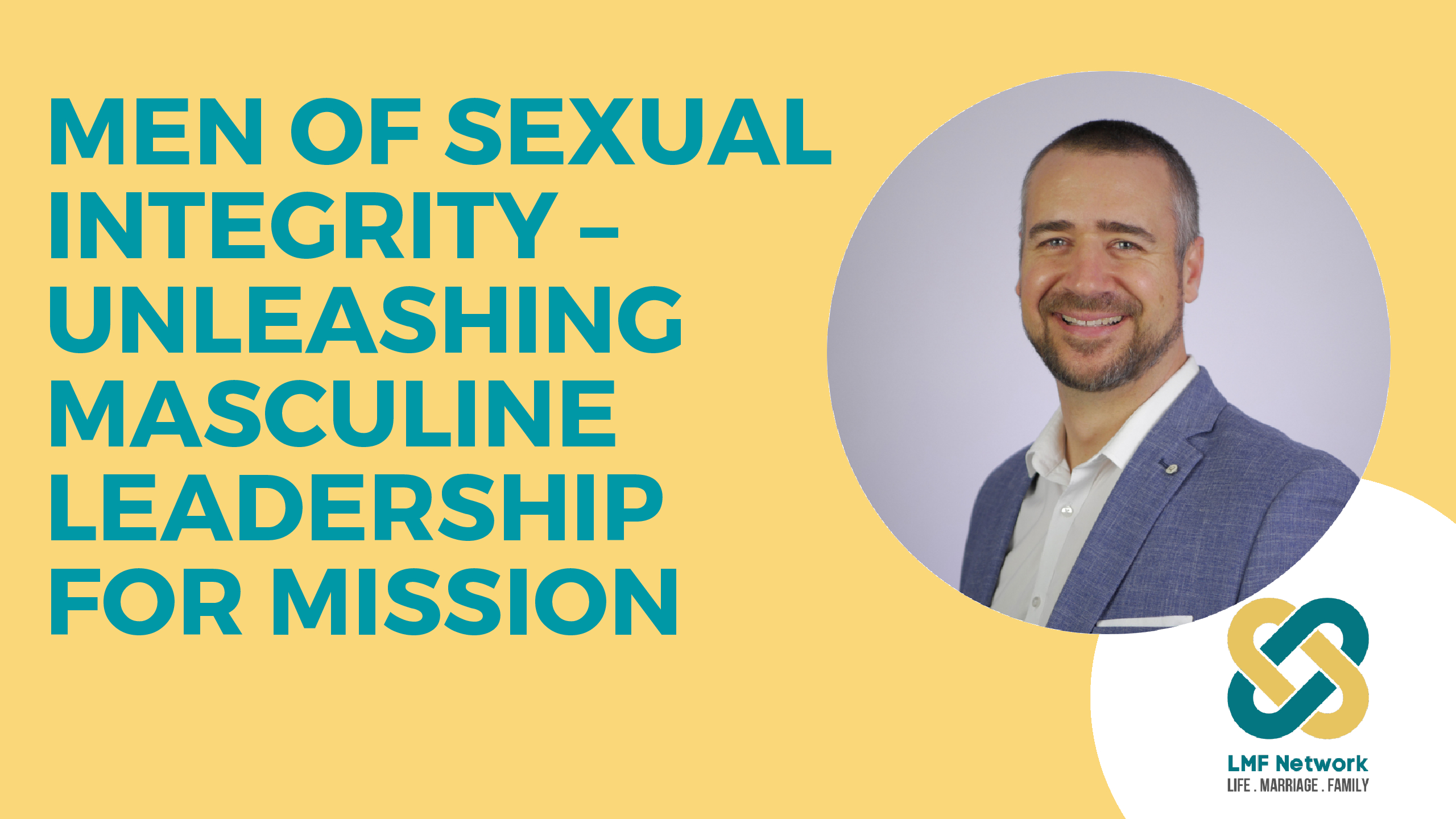
Presenter: Paul Ninnes
Paul Ninnes is the co-founder and Managing Director of Real Talk International, Australia’s largest relationships and sexuality education organisation. He holds a Bachelor of Physiotherapy and postgraduate qualifications in Sexual Health and Theology (Marriage & Family). Paul is married to Emma and together they have six children. He has spoken to tens of thousands of people across Australia and New Zealand on topics of human dignity, relationships, and sex.
Summary
Paul Ninnes delivered a presentation on men’s sexual integrity, framing pornography as a central issue affecting masculinity, marriage, family, and the Church. [00:00] He began by sharing his personal history with pornography, which started at age 11, to highlight the widespread nature of the problem and the lack of effective discipleship. [06:00] Paul presented statistics on the immense scale of pornography consumption and detailed its harms, describing it as a “super normal stimuli” that can become a neurochemical problem, not just a moral failing. [02:59] He argued that catechesis alone was insufficient and advocated for structured discipleship programs, like his own “Stout Hearted,” to reduce shame, foster community, and provide practical training. [19:02] The presentation concluded with a Q&A session where he addressed the impact on women, the link between pornography use and men leaving the church, and the practicalities of implementing his program. [27:35]
Interviewee Background
Paul was introduced as the co-founder and managing director of Real Talk International, described as one of Australia’s largest relationship and sexuality education organizations. [00:09] He held a bachelor’s degree in physiotherapy and postgraduate qualifications in sexual health, theology, and marriage and family. [10:32] Married with six children, he had extensive experience speaking to tens of thousands of people across Australia and New Zealand on topics of human dignity, relationships, and sex. [00:35]
Key Points
- Pornography was identified as a “center point issue” with profound negative impacts on masculinity, family, marriage, and the Church, extending beyond just a personal moral struggle. [02:31]
- Digital pornography was described as a “super normal stimuli,” a powerful force that hijacks the brain’s natural responses and can lead to addiction, which he framed as a neurochemical problem requiring more than just willpower to overcome. [03:41]
- Nni shared his personal testimony of starting to use pornography at age 11, despite being a devout Catholic, to illustrate how easily the issue can take hold and the historical lack of guidance and discipleship in this area. [06:00]
- The scale of the problem was vast, with one major website receiving 150 billion video views annually, and research indicating that 75% of Christian men and 41% of Christian women used pornography. [38:58]
- He argued that the Church’s typical responses, such as catechesis and spiritual direction, were insufficient on their own to address the complexities of this issue. [19:02]
- Structured discipleship programs that create community were presented as essential for healing. [17:09] He stated that the opposite of addiction is community, as these programs reduce shame, open pathways to deeper healing, and equip men to lead and disciple others.
- A strong correlation was suggested between sexual struggles and men, particularly young men, drifting away from the Church, due to the burden of shame. [25:41]
Notable Quotes
- “I think that this is a center point issue, not just around the sexuality topic, but around the topic of masculinity, the topic of family, the topic of marriage, and the topic of the church in general.” (02:24) – This was said at the beginning to frame the conversation, emphasizing that while he would speak a lot about pornography, the underlying issue of sexual integrity had far-reaching consequences. [02:31]
- “This becomes a neurochemical problem, not a moral problem. [15:00] For most people… if we think of it as simply a moral problem, it can sometimes remove the compassion we have that we might have for an addict.” (15:05) – Paul said this while discussing the harms of pornography, urging the audience to hold the tension between its sinfulness and its addictive, physiological nature to foster a more compassionate response. [15:07]
- “The opposite of addiction is community, right? Because addiction is so often linked to isolation for a person.” (19:11) – This quote was used to explain why group discipleship programs were so effective, as they directly counteracted the isolation in which addiction and shame thrive.
- “I genuinely believe that there is nothing else in the church that would have a better return on investment than investing in this topic.” (41:43) – Paul made this strong statement during his call to action, highlighting his conviction about the critical importance of addressing sexual integrity for the health and vitality of the Church. [41:43]
Kicker Quotes
- “Sin grows in… these shame laden areas of our existence grows in the dark like potatoes.” (17:20) [17:01]
- “You can hear chains getting broken as men are speaking.” (19:36)
- “Imagine if what we had 75% of the men turn up who were beating their wives or had alcohol addiction in the pews, we’d be on that every straight away, right?” (42:00) [42:02]
Detailed Insights
Main Arguments:
- Pornography and hypersexuality constituted a crisis of unprecedented scale, acting as a “super normal stimuli” that fundamentally harms individuals, relationships, and the Church. [02:59] (03:13, 12:45)
- The Church’s traditional approach, focusing primarily on catechesis and spiritual formation, was insufficient to combat a problem that is also deeply psychological, neurochemical, and rooted in shame. [19:02] (18:44)
- A new model of practical, community-based discipleship was urgently needed to provide men with training, fraternity, and a safe pathway to healing, which in turn would unleash authentic masculine leadership. (16:45, 34:13)
Supporting Evidence:
- He used his personal testimony of struggling with pornography from a young age as a practicing Catholic to ground the issue in lived experience. (04:42)
- He cited statistics to demonstrate the scale of the problem, including 150 billion annual views on a single porn website and Barna research showing 75% of Christian men used pornography. [38:51] (13:06, 28:15)
- He referenced scientific concepts like “super normal stimuli” and brain plasticity to explain the addictive power of digital pornography. [03:41] (03:31, 14:11)
- He provided anecdotal evidence from his “Stout Hearted” program, describing the “palpable” sound of breakthrough and chains breaking as men shared their struggles in community. [39:49] (19:32)
Themes and Trends
Recurring Themes:
- Shame and Isolation: A recurring theme was how shame kept men silent and isolated in their struggles, and how bringing the issue into the light of community was the first step toward healing. (17:14, 25:25)
- The Need for Practical Discipleship: Paul repeatedly contrasted mere teaching (catechesis) with active training and discipleship, arguing that men needed practical tools and strategies, not just theological knowledge, to fight this battle. (18:44, 34:13)
- Pornography as a “Center Point Issue”: The idea that pornography was not a peripheral issue but a core problem affecting the very foundations of masculinity, marriage, vocations, and the Church’s mission was central to his entire presentation. [02:31] (02:24, 43:17)
Emerging Trends:
- A Shift to a Holistic Framework: Paul revealed a trend toward viewing pornography struggles not just as a moral failure but through a more holistic lens that includes neurochemical addiction and psychological wounds, necessitating compassion alongside accountability. (15:05, 47:24)
- Hope in Younger Generations: He highlighted an emerging and hopeful trend that men in the 15-25 age bracket were kicking pornography habits at a higher rate than those aged 25-35, suggesting a growing awareness and desire for freedom among younger men. [21:39] (26:33)