
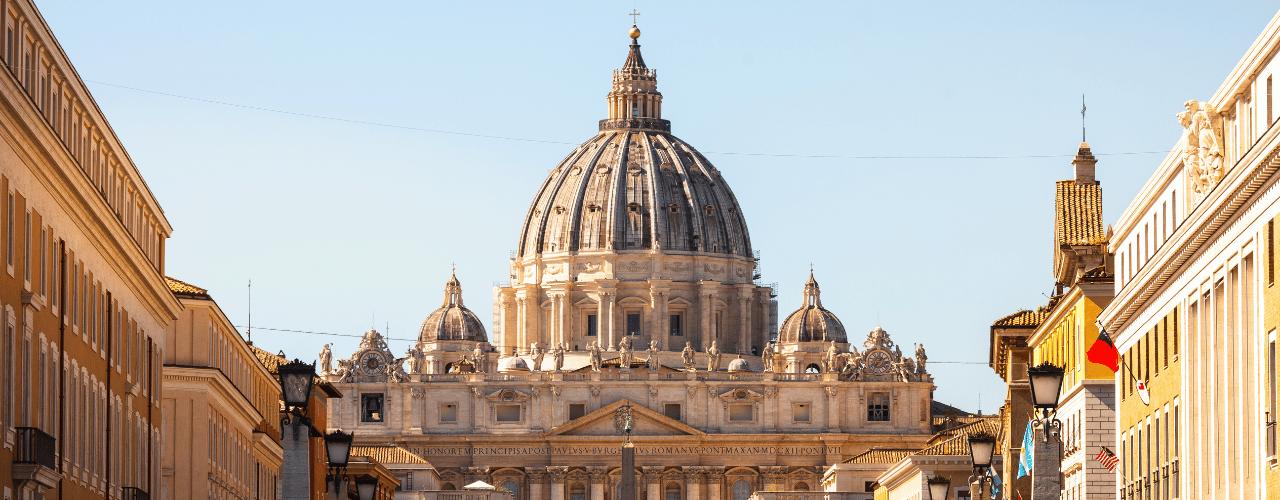
What does the October Rome Synod signal for marriage ministry? Some of the discussion indicates that there is a shift in focus from marriage preparation to the years that follow the wedding.
September 14, 2026
On September 6, reporting confirmed what many in the field have anticipated since March: Pope Leo XIV’s October 7–14 gathering of bishops’ conference presidents in Rome will mark the tenth anniversary of Amoris Laetitia not with commemoration alone, but with what organizers are calling “synodal discernment” on the pastoral state of marriage and family life worldwide.
For those of us who design, deliver, and defend marriage formation programs at the parish and diocesan level, the meeting’s shape – and its ambiguities – deserve close attention now, before the outcomes are set.
The preparatory document organizes discussion around five themes – the Church’s pastoral commitment to:
- families,
- marriage and young people,
- early married life,
- marriage as mission, and
- — most consequentially for practitioners — “accompanying families in complex situations.”
Notably, coverage of the summit emphasizes a deliberate pivot away from the sacramental-discipline flashpoints that dominated the 2014–2016 Synod cycle (the communio debates over divorced-and-remarried Catholics).
Instead, the framing on offer is broader and, arguably, more useful to those of us doing formation work: families as agents of evangelization in their own right, not merely recipients of pastoral care administered to them.
This is a meaningful shift for marriage educators to register. For a decade, much diocesan energy around Amoris Laetitia has been consumed by paragraph 8’s discernment-and-accompaniment framework as it applies to canonical edge cases. That work remains necessary.
But it has arguably crowded out the exhortation’s more expansive – and more directly actionable – content: its insistence (AL 217–230) that ongoing marriage formation, not just pre-Cana preparation, is where the Church’s pastoral investment in families should concentrate.
If the October meeting genuinely centers “marriage as mission” and “early married life” as standalone themes, it hands practitioners a mandate we have long argued for: formation as a continuum from courtship through the first years of marriage, not a single sacramental checkpoint.
Unresolved Questions
The unresolved questions matter too, and should temper triumphalism in either direction. As of this writing, how family representatives will be selected, what authority the gathering’s conclusions will carry, and whether “complex situations” will meaningfully engage lay-run intervention programs (as distinct from purely sacramental or canonical responses) remain genuinely open.
Bishops themselves have reportedly described uncertainty about what will be expected of them in the room. For those of us whose work already sits in the “complex situations” space – walking with couples in high-conflict, separated, or reconciling marriages – this is the moment to have our data and our models ready to offer, rather than waiting to receive direction that may not arrive in operational form.
Programs like SmartLoving’s Breakthrough course — a structured, evidence-informed intervention for individual spouses in gridlocked or distressed marriages, usable with or without an accompanying mentor — are precisely the kind of field-tested “accompaniment” infrastructure the synodal language gestures toward but does not yet specify. If the October meeting is serious about families as active agents rather than passive recipients, lay-led, replicable formation models deserve a seat at that table, not merely a mention in its closing document.



Leave A Comment
You must be logged in to post a comment.